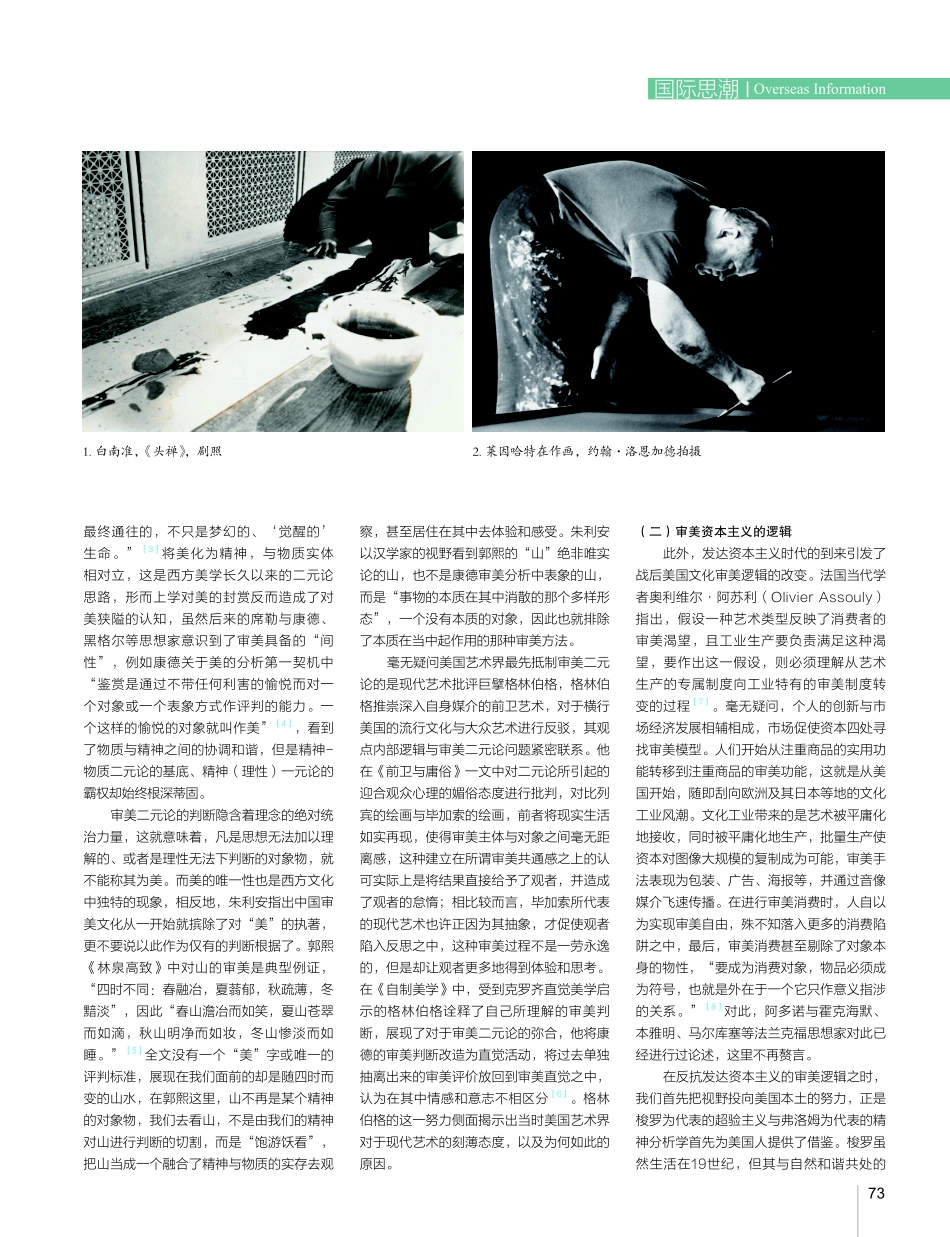
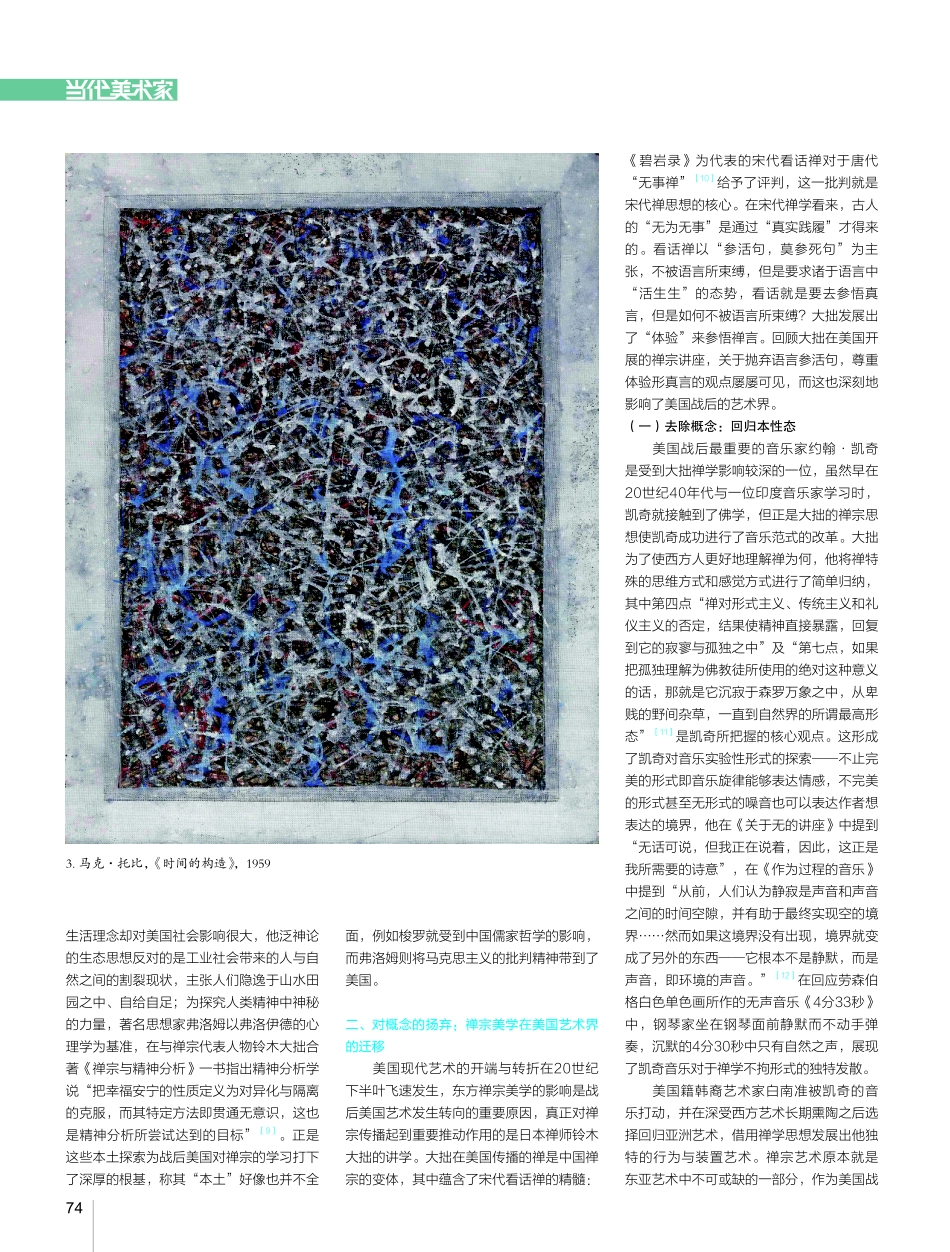
从概念到体验、从体验到语言:东方禅宗美学与战后美国艺术的发展路向FromConcepttoExperience,fromExperiencetoLanguage:DevelopmentofZenAestheticsintheOrientandPostwarAmericanArt苏梦熙SuMengxi摘要:美国现代艺术的转折在20世纪下半叶飞速发生,东方禅宗美学的影响是战后美国艺术发生转向的重要原因。本文认为,传入美国的禅宗美学是宋代“看话禅”自近代以来的禅宗变体,其内涵以体验为中心,以概念为旁证,以语言为实现。据于此,本文试图从西方审美思想的嬗变、禅宗思想的迁移、代表艺术家的创作过程三方面进行分析,试图追溯禅宗在战后美国艺术界的发展和影响,并观照其背后中西文化美学交融、互鉴史实。关键词:禅宗美学,战后美国艺术,文明互鉴Abstract:Thesecondhalfofthe20thcenturymarkedaturningpointinthemodernAmericanartundertheinfluenceofEasternZenaestheticsonthepostwarAmericanart.ThispaperindicatesthattheZenaestheticsintroducedtotheUnitedStatesisoneofvariantsoftheSongDynasty’s“KanhuaDhyana”sincemoderntimes,withtheexperienceasitsessence,theconceptasitsevidence,andthelanguageasitsexpression.Therefore,theauthorcarriesouttheanalysisfromthreeaspects:thedevelopmentofWesternaesthetics,thetransferofZen,andthecreatingprocessofrepresentativeartists.ThisarticlealsodiscussesthedevelopmentandinfluenceofZenaestheticsonthepost-warAmericanartandtheintegrationofChineseandWesternculturalaestheticsandmutuallearningofhistoricalfacts.Keywords:Zenaesthetics,PostwarAmericanart,exchangesandmutuallearningofcivlizations禅宗对第二次世界大战后的西方现当代艺术产生影响是不争的事实,自20世纪50年代后期以来,国外就开始对此课题进行不同角度与层面的研究,依据海伦·威斯塔兹所梳理,著名的美国现代艺术史家阿尔弗雷德·巴尔(AlfredBarrJr.)就曾对于禅宗的普及情况进行介绍,史尼肯伯格(ManfredSchneckonburger)1972年的文章《十九与二十世纪欧洲艺术及音乐与大洋洲及非印裔美洲的相遇》中用很长的篇幅介绍了20世纪对禅宗及东方书法感兴趣的艺术家们,以及当代艺术史家大卫·克拉克(DavidClarke)1988年《影响战后美国绘画及雕塑的东方思想》对禅宗思想是如何影响抽象表现主义艺术进行了阐释[1];2009年,由美国当代著名亚洲艺术史学者亚历山大·门罗(AlexandraMunroe)...