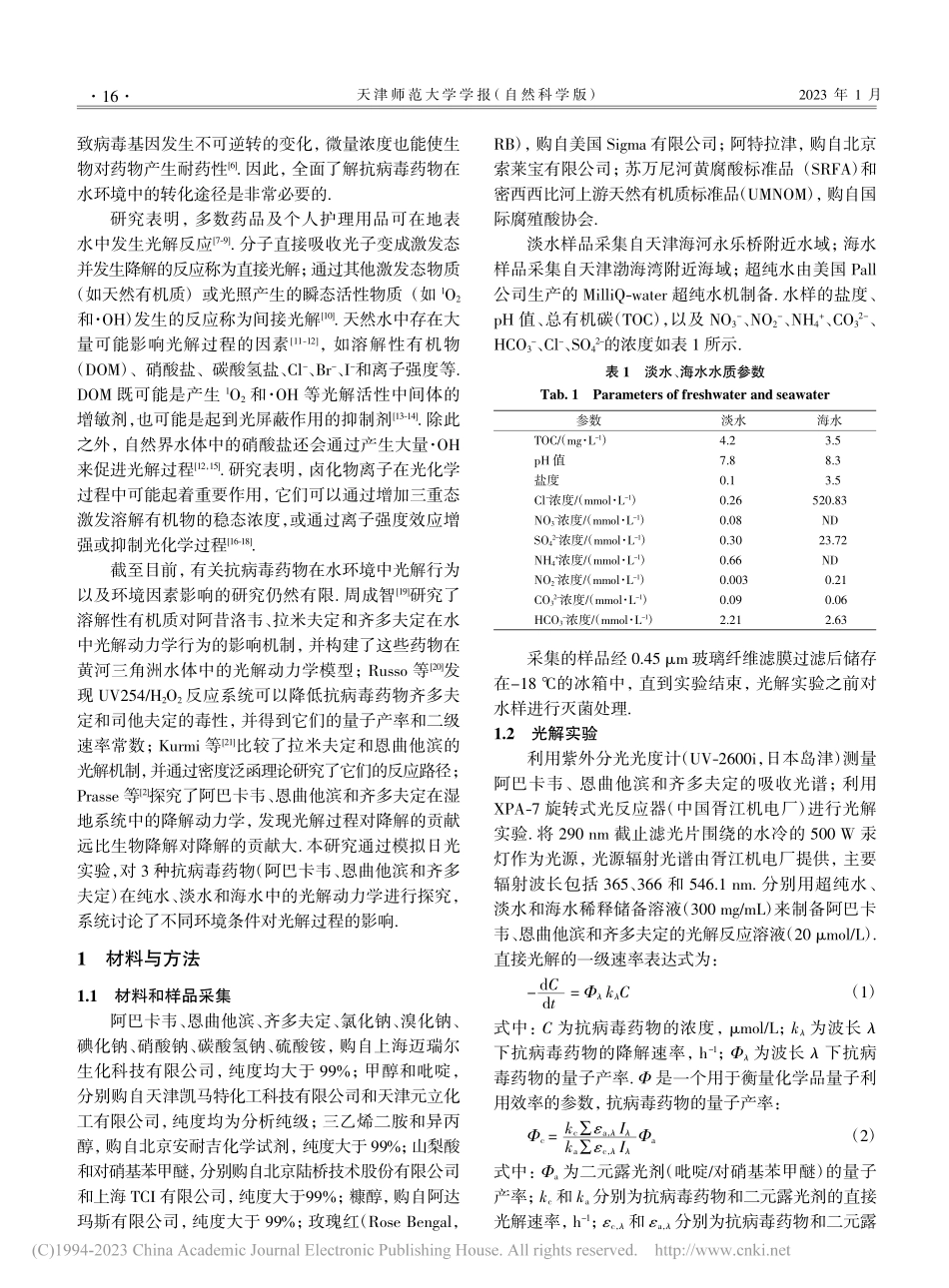
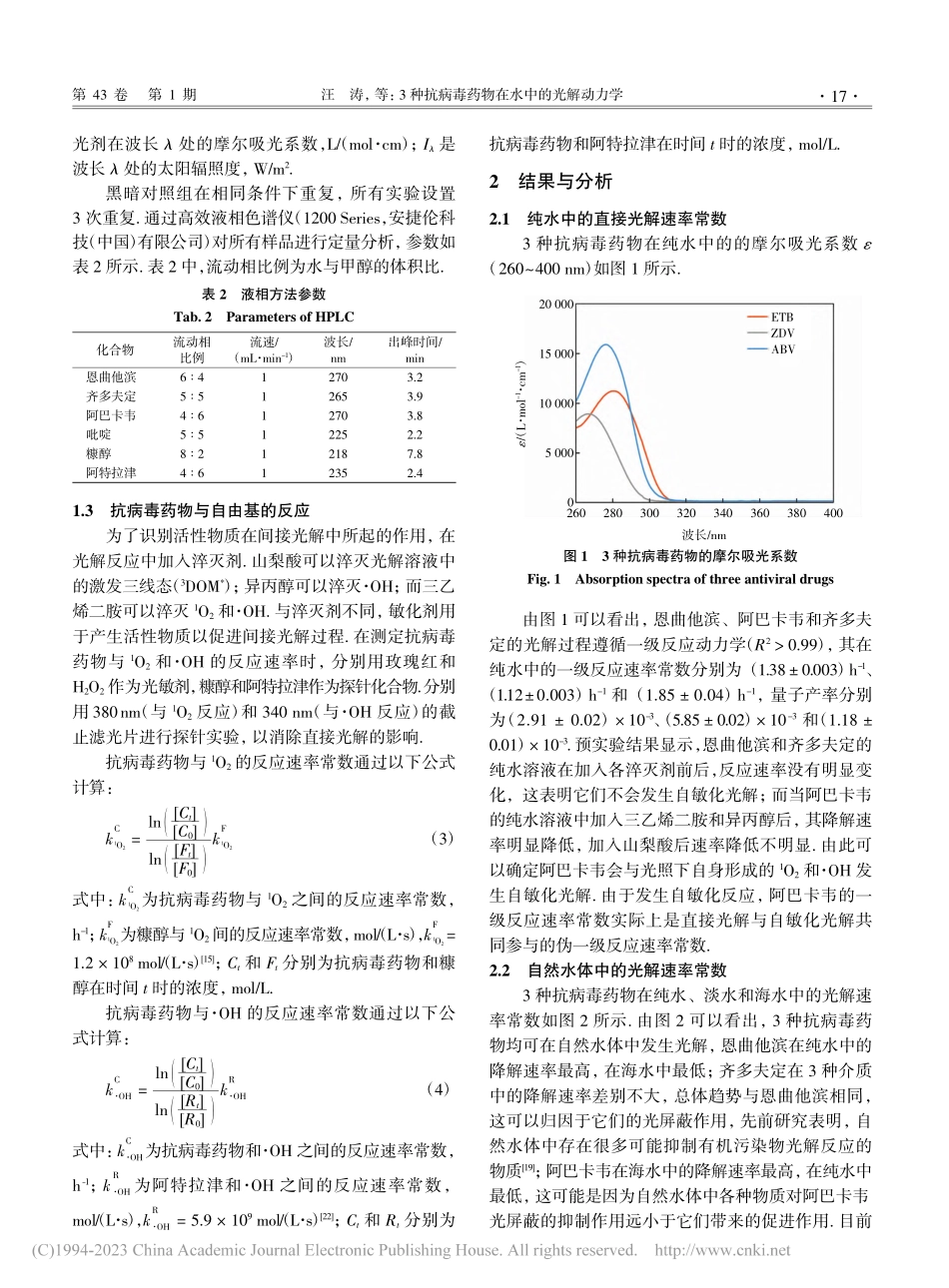
抗病毒药物是一种可直接抑制或杀灭病毒、抑制生物合成、增强宿主抗病毒能力的药物[1-2].与传统口服药物一样,抗病毒药物可以通过粪便或尿液排出,但污水处理厂对抗病毒药物的去除效率有限,所以这些药物会通过污水处理厂排水进入水环境中.尽管抗病毒药物的环境浓度很低,但根据定量构效关系模型和毒性数据可知[3-5],它们对藻类、水蚤和鱼类存在潜在威胁.除对水生生物有毒性外,抗病毒药物还可能导PhotolysiskineticsofthreeantiviraldrugsinwaterWANGTao1,2,WUYingxin1,2,MENGLingchen2,ZOUHongyan1,2(1.TianjinKeyLaboratoryofWaterResourcesandEnvironment,TianjinNormalUniversity,Tianjin300387,China;2.SchoolofGeographicandEnvironmentalSciences,TianjinNormalUniversity,Tianjin300387,China)Abstract:Inordertolearnthephotolysiskineticsofantiviraldrugsinwaterandtheeffectsofdifferentenvironmentalconditions,asimulatedsunlightexperimentwascarriedoutwithabacavir(ABV),entratabine(ETB)andzidovudine(ZDV)asresearchobjects.Theresultsshowedthat①ThephotolysisofETBandZDVweremainlydominatedbydirectphotolysis,whilethephotolysisofABVwasmainlybyindirectphotolysis;②ThedegradationratesofETBandZDVinfreshwaterwerelowerthanthatinpurewater,buthigherthanthatinseawater,whileABVhadacompletelyoppositetrend;③NO3-couldsignificantlypromotethephotolysisofthethreeantiviraldrugs.NO2-hadnoobviouseffectsonthephotolysisofETBandZDV,butcouldsignificantlydecreasethereactionrateofABV;④CO3-andHCO3-inhibitedthephotolysisofthethreedrugstodifferentdegrees;⑤Dissolvedorganicmatter(DOM)couldpromotethephotolysisofABV,butcouldinhibitthephotolysisofETBandZDV;⑥NH4+andSO42-hadnoobviouseffectsonthephotolysisofETBandZDV,butcouldsignificantlyenhancethephotoly-sisofABV;⑦HalogenionscouldinhibitthephotolysisofETBandZDVtosomeextent,butcouldpromotethephotolysisofABV;⑧ABVcouldundergoself-sensitizedphotolysisinadditiontodirectphotolysisandindirectphotolysis.Keywords:antiviraldrugs;photolysiskinetics;directphotolysis;indirectphotolysis;selfsensitizedphotolysis3种抗病毒药物在水中的光解动力学汪涛1,2,武英欣1,2,孟令辰2,...